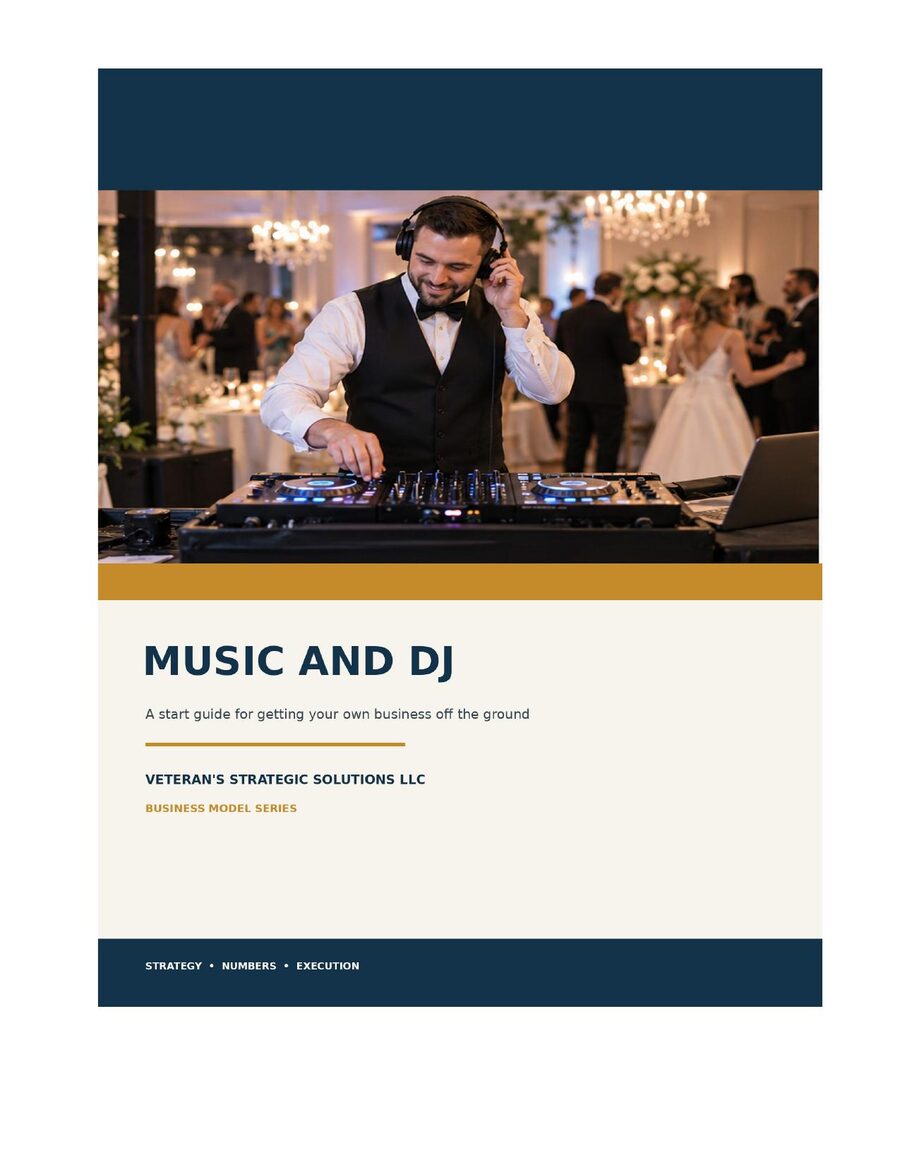
Weddings Pay Double: The Real Numbers for a Mobile DJ Business
The product here is reliability and nerve, not song selection — this plan is built around that. It covers the real core-rig cost ($2,700 to $11,000, up to $27,000 with full lighting), why bringing two sound systems (a battery PA for the ceremony, the main rig for the reception) is what separates professionals, and the actual copyright rule: ASCAP's own published position is that it does not license DJs, and a private wedding or family party is exempt, while corporate and public events are genuinely different and need their own answer. It also runs the worked-example math on why 25 weddings at the mid-tier rate ($1,400) nets nearly double 35 low-priced parties for ten fewer weekends worked.
$19 · instant download, no shipping
Get the Plan — $19Secure checkout, instant email delivery of the PDF.
Built From Real Numbers
Startup runs $2,700 to $11,000 for a basic rig, no DJ license exists in any state, and cash flow is genuinely good because events are paid in deposits and on the day. The plan prices three tiers — $450 to $750 for a four-hour party, $900 to $1,800 for a six-hour wedding with ceremony sound, and $1,800 to $2,800+ for a full premium day — and shows weddings running about double general party rates in every market checked.
It includes a full worked market study of a real Kansas town near a military installation, showing 70-plus weddings a year against only a handful of serious competitors, plus an under-served installation market of unit balls, retirements and dining-ins. The planning-sheet checklist (must-play list, do-not-play list, phonetic name spellings, family dynamics) and the redundancy rule — a spare of everything that can stop the music — round out the plan.
What's Inside
- Event Package Quote Calculator for base package, add-ons and overtime
- Event Run of Show template for timeline, cues and confirmations
- Redundancy and Load-In Checklist to prevent equipment failure
- Venue and Vendor Referral Tracker for photographers and preferred lists
- Core equipment list with real price ranges for the full rig and backups
- The private-performance licensing rule, explained with ASCAP's own position
- First 90-days plan built around getting on one venue's preferred vendor list