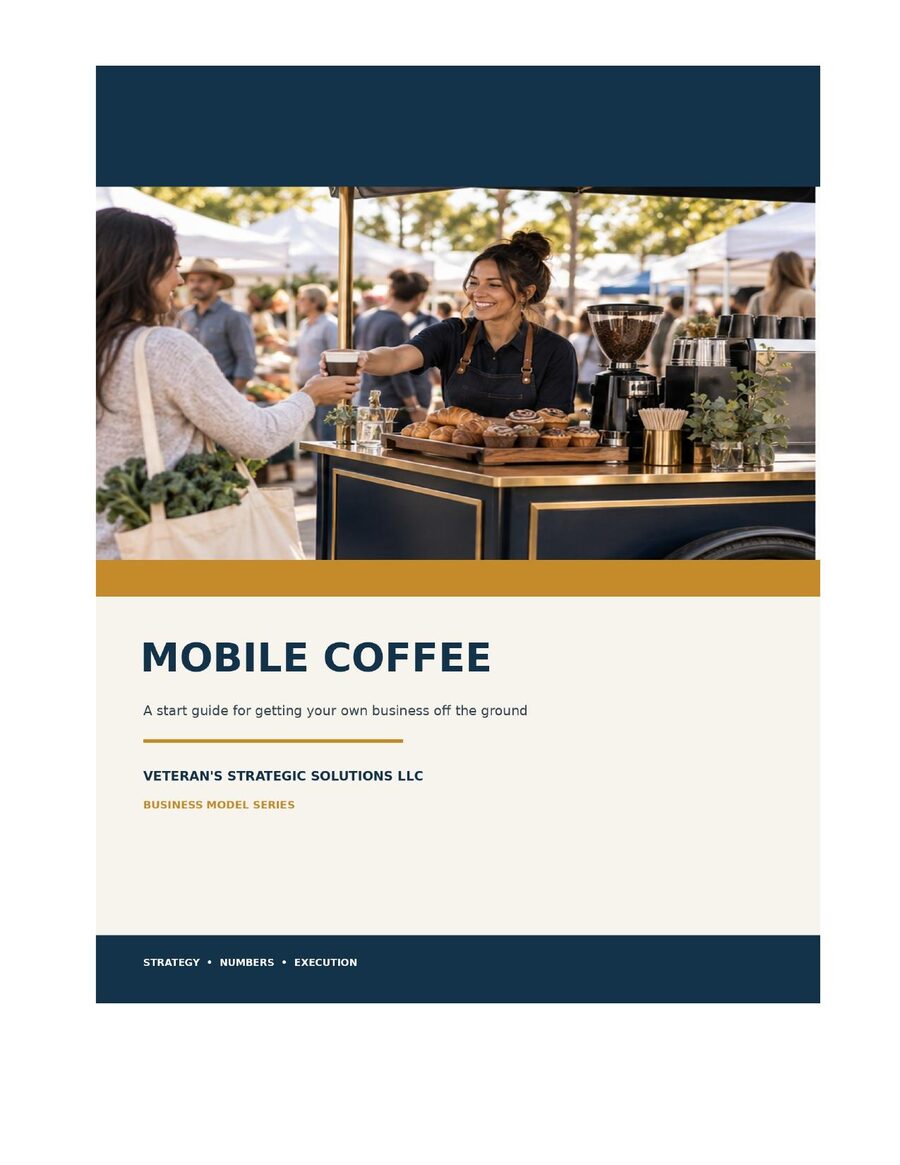
Your Health Department Designs the Cart. Call Before You Buy One.
Most new mobile coffee operators buy an attractive cart online and find out afterward it can't pass inspection — because your local health department dictates the hand-washing station, water tank capacity, and gray-water requirements before you ever pick a color. This plan works through that call first, then the voltage problem that strands more first mornings than anything else (a 220V espresso machine will not run on a household generator), and the revenue-per-hour math that shows why a five-hour office plaza morning at $270 can be worse than a two-hour job-site stop at $440.
$22 · instant download, no shipping
Get the Plan — $22Secure checkout, instant email delivery of the PDF.
Built From Real Numbers
A lean cart build — a $1,500 used cart, a $1,200 used espresso machine, a $400 grinder, and $700 in permits and inventory — is a real $3,800 setup that can be recovered within a couple of months at one steady farmers market.
Built around product cost running just 15 to 25% of a $5–$7 latte, one of the best margins in food service, with the season and weather math that decides whether a 28-week year or a 50-week year is the honest plan.
What's Inside
- A cart-versus-trailer-versus-truck cost comparison and why most people should start with a used cart
- The exact questions to ask your health department about water capacity and commissary requirements
- A generator load planner covering voltage, amperage, and the 20% headroom rule
- Espresso machine and grinder tiers by price, with what each buys you in throughput
- A per-drink cost and pricing calculator built on real wholesale ingredient ranges
- A location revenue-per-hour tracker to find and keep your best stops
- Guidance on booking flat-rate weddings and corporate events, the highest-margin work in the business
- A 90-day launch plan and a pre-purchase health department cart specification checklist